Friday, December 18, 2015

First Light: (The Red#1) Review

First Light The Red #1

Linda Nagata

Saga Press

June 30, 2015

4/5 Stars
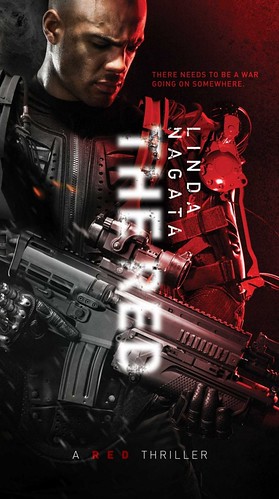
  In her gripping military science fiction novel “The Red: First Light,” Linda Nagata crafts a compelling narrative that seamlessly blends cutting-edge technology with the gritty realism of modern warfare. Set in a near-future world, the story follows Lieutenant James Shelley, an unwitting soldier thrust into the heart of a conflict that blurs the lines between human autonomy and artificial intelligence. Nagata’s masterful storytelling and attention to detail create a vivid, immersive experience that will captivate readers from start to finish.

At the center of this thrilling tale is Lt. James Shelley, a character whose journey into the US Army begins not with patriotic fervor, but as a consequence of his participation in a protest march. This unconventional entry point immediately sets Shelley apart from the typical military protagonist, adding layers of complexity to his character and motivations. Nagata skillfully develops Shelley’s character throughout the novel, allowing readers to witness his growth and internal struggles as he navigates the challenges of military life and the ethical dilemmas posed by advanced technology.

The world Nagata constructs is a fascinating extrapolation of our current technological trajectory. The narrative is set in a future where Defense and Corporate Services (DCS) corporations wield significant power, blurring the lines between governmental and private sector control. This backdrop serves as a chilling reflection of contemporary concerns about corporate influence and the privatization of military operations.

One of the most captivating aspects of “The Red: First Light” is Nagata’s exploration of near-future technologies. The author demonstrates a remarkable ability to envision and describe advanced systems that feel both fantastical and eerily plausible. From enhanced combat suits to neural implants that allow for instantaneous communication and data processing, the technological elements are seamlessly integrated into the narrative, enhancing the story without overshadowing it.

Particularly noteworthy is Nagata’s treatment of artificial intelligence and its role in military operations. The concept of a mysterious, omniscient AI known as “the Red” adds an element of intrigue and raises thought-provoking questions about the nature of consciousness and the potential consequences of relying on machine intelligence in matters of life and death.

Nagata’s commitment to realism is evident in her portrayal of military life and combat scenarios. The author’s research and attention to detail shine through in the authentic depiction of military protocols, tactics, and the psychological toll of warfare. This level of authenticity grounds the more speculative elements of the story, creating a believable and immersive world.

However, the novel is not without its flaws. While Shelley is generally portrayed as a realistic army officer, there are instances where his reactions to certain events seem incongruous or difficult to relate to. This occasional disconnect can momentarily pull the reader out of the otherwise engrossing narrative.

Additionally, the characterization of some of Shelley’s squad members falls short of the depth and nuance exhibited in the protagonist’s development. Given the extended period the squad has presumably spent together, one might expect a richer portrayal of these supporting characters. Instead, some squad members are reduced to little more than names and brief descriptors, verging on stereotypes rather than fully realized individuals.

It’s worth noting that the story is told exclusively from Shelley’s perspective, which may account for some of these limitations in character development. However, this narrative choice doesn’t fully justify the lack of depth in portraying characters who should be integral to Shelley’s daily life and experiences.

One of the most commendable aspects of “The Red: First Light” is Nagata’s ability to craft a complete, self-contained story within the framework of a series. This is a rare and impressive feat in the realm of science fiction and fantasy literature, where multi-volume epics often leave readers hanging with unresolved plotlines and cliffhanger endings.

Nagata deserves significant praise for her storytelling prowess in this regard. By providing a satisfying conclusion to the main narrative arc while still leaving room for future exploration of the world and characters, she strikes a delicate balance that respects the reader’s investment in the story while generating interest in potential sequels.

Beyond its thrilling plot and technological speculations, “The Red: First Light” offers a nuanced exploration of several pertinent themes. The novel delves into questions of free will and determinism, particularly in the context of advanced AI and neural implants. Shelley’s struggles with the influence of “the Red” and his own augmented capabilities raise intriguing philosophical questions about the nature of choice and the boundaries of human consciousness.

The book also provides a sharp critique of corporate power and its intersection with military operations. Through the portrayal of DCS corporations and their influence over global conflicts, Nagata offers a cautionary tale about the potential consequences of unchecked corporate growth and the privatization of traditionally governmental functions.

Furthermore, the novel touches on themes of media manipulation, public perception of war, and the ethical implications of advanced surveillance technologies. These elements add depth to the narrative and encourage readers to reflect on the trajectory of our own society and the potential consequences of our technological advancements.

Nagata’s prose is crisp, efficient, and highly effective in conveying both action sequences and more introspective moments. Her writing style perfectly complements the military setting, providing clear and precise descriptions of combat scenarios while also capturing the emotional and psychological states of the characters.

The pacing of the novel is well-executed, with a good balance between intense action sequences and quieter moments of character development and world-building. Nagata keeps the reader engaged throughout, skillfully building tension and releasing it at key moments.

“The Red: First Light” is a standout entry in the military science fiction genre, offering a compelling blend of near-future speculation, military action, and thought-provoking themes. Linda Nagata’s skillful storytelling and attention to detail create a vivid, immersive world that feels both fantastical and eerily plausible.

While the novel has some minor shortcomings in terms of character development for supporting cast members, these are overshadowed by the strength of the overall narrative, the depth of the world-building, and the nuanced exploration of complex themes. Nagata’s ability to craft a complete, self-contained story within the first book of a series is particularly praiseworthy, demonstrating her respect for the reader and her mastery of narrative structure. This approach sets “The Red: First Light” apart from many other series openers and leaves the reader satisfied yet intrigued about the potential for future installments. For fans of military science fiction, near-future speculation, or simply well-crafted storytelling, “The Red: First Light” is a must-read. It offers a thrilling adventure grounded in realistic technology and military protocols, while also prompting reflection on the ethical and societal implications of our rapidly advancing technological landscape. Linda Nagata has created a work that not only entertains but also challenges readers to consider the potential trajectories of our own world, making “The Red: First Light” a standout contribution to contemporary science fiction literature. — -4/5

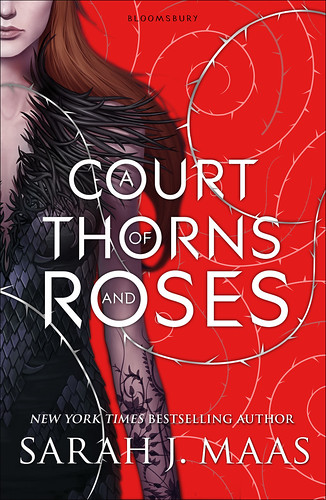
Court of Roses and Thorns Review

Court of Roses and Thorns

Sarah J. Maas

Bloomsbury USA Childrens

May 5, 2015

3/5 Stars

    Sarah J. Maas, known for her bestselling “Throne of Glass” series, ventures into new territory with “A Court of Thorns and Roses,” the first installment in her fantasy saga. As a reader familiar with Maas’s previous work, I approached this novel with a mix of anticipation and caution. While it shares some similarities with her earlier series, “A Court of Thorns and Roses” presents a refreshing departure from Maas’s established formula, offering a more mature and nuanced narrative that shows promise for the series ahead.

The story unfolds in a world where the realms of mortals and Fae coexist, separated by an ancient treaty and a magical wall. This well-worn theme in fantasy literature is given new life through Maas’s vivid descriptions and intricate world-building. The author paints a rich tapestry of the Fae realm, known as Prythian, with its various courts and complex political dynamics.

Our protagonist, Feyre, is a young human woman struggling to support her impoverished family through hunting. Her life takes a dramatic turn when she kills a wolf in the woods, unwittingly setting off a chain of events that thrusts her into the dangerous and alluring world of the Fae.

Feyre stands out as a more relatable and multifaceted protagonist compared to Celaena from the “Throne of Glass” series. Her struggles with poverty, her fierce devotion to her family, and her artistic inclinations make her a compelling character from the outset. As the story progresses, we witness Feyre’s growth from a wary, survival-focused mortal to a woman who begins to understand and navigate the complexities of the Fae world. Tamlin, the High Lord of the Spring Court and Feyre’s love interest, initially appears as the typical brooding Fae male often found in this genre. However, Maas gradually peels back layers of his character, revealing vulnerabilities and complexities that make him more than just a romantic foil. The supporting cast, including the enigmatic Lucien and the menacing Amarantha, adds depth to the narrative. Each character feels distinct and serves a purpose beyond merely advancing the plot.

The story’s pacing is one of its strengths. Maas skillfully balances world-building, character development, and plot progression, keeping the reader engaged throughout. The first half of the book focuses on Feyre’s adjustment to life in the Spring Court and the slow-burn romance between her and Tamlin. This section, while somewhat predictable, is enjoyable due to the lush descriptions and the gradual unveiling of the Fae world’s mysteries. The second half of the book takes a darker turn, introducing higher stakes and more complex conflicts. This is where Maas’s storytelling truly shines, as she subverts expectations and pushes her characters to their limits. The trials Feyre faces Under the Mountain are harrowing and compelling, forcing her to confront not only external threats but also her own limitations and prejudices.

As with many young adult and new adult fantasy novels, romance plays a significant role in “A Court of Thorns and Roses.” The relationship between Feyre and Tamlin develops organically, with moments of tension, tenderness, and passion. Maas handles the romantic elements with more maturity than in her previous series, exploring themes of consent, sacrifice, and the complexities of love across cultural divides.

However, the romance doesn’t overshadow the broader narrative. Feyre’s relationships with other characters, particularly Lucien and Rhysand, add layers of intrigue and complexity to the story. These interactions hint at deeper conflicts and alliances that are likely to be explored in future installments of the series.

Maas weaves several themes throughout the novel, including the nature of love and sacrifice, the consequences of prejudice, and the power of art and creativity. The author draws inspiration from various fairy tales, most notably “Beauty and the Beast,” but reimagines these familiar elements in fresh and sometimes subversive ways.

The symbolism of the different Fae courts, each associated with a season or time of day, adds depth to the world-building and provides a rich backdrop for exploring themes of change, rebirth, and the cyclical nature of power.

Maas’s writing has noticeably improved since her earlier works. Her prose in “A Court of Thorns and Roses” is more polished and evocative, particularly in her descriptions of the Fae realm and its inhabitants. She strikes a balance between lyrical passages and straightforward narration, creating a reading experience that is both immersive and accessible.

However, there are moments where the dialogue feels stilted or overly dramatic, particularly in some of the romantic exchanges. These instances, while not frequent, can momentarily pull the reader out of the story.

One of the main criticisms that can be leveled at “A Court of Thorns and Roses” is its predictability, especially in the first half of the book. Many of the plot points and character dynamics will feel familiar to readers well-versed in the fantasy romance genre. However, Maas manages to inject enough originality and charm into these familiar tropes to keep them engaging.

The latter part of the book, particularly the finale, is where Maas truly subverts expectations. The resolution of the conflict Under the Mountain takes unexpected turns, challenging both the characters and the readers’ assumptions. This section elevates the book above many of its peers in the genre and sets up intriguing possibilities for the rest of the series.

A point of contention in the novel is the use of an old and well-known riddle as a pivotal plot device. While the inclusion of riddles and trials is a common trope in fantasy literature, the choice of such a familiar puzzle may disappoint readers looking for more originality. It’s possible that Maas intended this as a nod to classic fairy tale elements, but it comes across as a missed opportunity for a more creative challenge.

For readers familiar with Maas’s previous work, “A Court of Thorns and Roses” represents a significant step forward in terms of storytelling and character development. While it shares some similarities with “Throne of Glass,” such as a strong female protagonist and a fantasy setting, the overall narrative feels more cohesive and mature.

The romance in this series is better integrated into the plot, avoiding the sometimes-convoluted love triangles that characterized “Throne of Glass.” Additionally, the world-building in “A Court of Thorns and Roses” feels more fully realized from the outset, providing a solid foundation for the series to build upon.

“A Court of Thorns and Roses” is a promising start to Sarah J. Maas’s new series. While it doesn’t completely break free from the conventions of the fantasy romance genre, it offers enough fresh elements and compelling storytelling to stand out. The book’s strengths lie in its vivid world-building, complex characters, and the unexpected twists in its latter half.

For fans of fantasy romance, this novel offers a satisfying blend of magic, political intrigue, and passionate relationships. For those new to Maas’s work or those who found “Throne of Glass” lacking, “A Court of Thorns and Roses” presents an excellent entry point into her storytelling. While it may not revolutionize the genre, it certainly demonstrates Maas’s evolving skills as a writer and her ability to craft a captivating tale that leaves readers anticipating the next installment.

Friday, December 4, 2015


Throne of Glass
Sarah J. Maas
Bloomsbury USA Childrens
 (August 7, 2012)
2/5 Stars
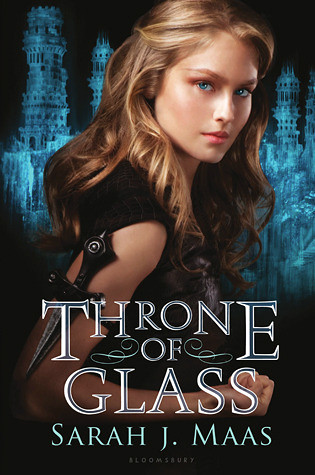
    Sarah J. Maas's "Throne of Glass" is the first installment in her bestselling young adult fantasy series of the same name. While not quite reaching the stratospheric popularity of authors like Suzanne Collins or Cassandra Clare, Maas has carved out a significant following in the YA fantasy genre. The series gained particular attention when its third book won the Goodreads Choice Award for Best Young Adult Fantasy, beating out acclaimed works like Naomi Novik's "Uprooted" - a decision that raised some eyebrows given "Uprooted's" more mature themes and writing style. At its core, "Throne of Glass" follows Celaena Sardothien, an 18-year-old assassin who is offered a chance at freedom from imprisonment if she agrees to compete in a deadly contest to become the King's Champion. This premise sets up what should be a thrilling tale of intrigue, action, and high-stakes competition. However, the execution of this promising concept falls short in several key areas, creating a disconnect between the story's potential and its actual delivery. 

  The most glaring issue lies in the characterization of Celaena herself. Billed as a renowned and ruthless assassin, Celaena's actions and demeanor throughout the novel fail to convincingly portray this backstory. Instead of a hardened killer shaped by a life of violence and survival, readers are presented with a character who often comes across as naive, inexperienced, and more concerned with romantic entanglements than the life-or-death situation she finds herself in. This dissonance between Celaena's supposed background and her actual behavior is jarring and undermines the credibility of the narrative. 

  Maas's decision to make her protagonist an assassin is an intriguing one, but it's a choice that demands careful handling to maintain believability. The disconnect between Celaena's backstory and her actions suggests that perhaps a different character concept - such as a young woman with some combat training but less extreme life experiences - might have been more fitting for the story Maas ultimately tells. The assassin angle feels more like an attempt to add edginess to the character rather than an integral part of who Celaena is. 

  The love triangle that develops between Celaena, Crown Prince Dorian, and Captain of the Guard Chaol Westfall further detracts from the potential of the premise. While romantic subplots are common in YA literature, the emphasis placed on this aspect of the story overshadows the more compelling elements of political intrigue and personal growth that could have been explored. The romance often feels forced and distracts from the high-stakes competition and darker themes the novel attempts to address. 

  Prince Dorian's characterization is particularly problematic. Described as weak and ineffectual, he fails to come across as a compelling love interest or a believable heir to a powerful kingdom. This weakness in character development extends beyond Dorian, with many of the supporting cast feeling more like caricatures than fully realized individuals. 

  The novel's world-building and plot consistency also suffer from a lack of attention to detail. Inconsistencies in character behavior and motivations, along with convenient plot developments, give the impression of a hastily constructed narrative rather than a carefully crafted fantasy world. This "laziness" in storytelling, as some critics have noted, undermines the reader's ability to fully immerse themselves in the world Maas has created. 

  Despite these flaws, "Throne of Glass" does have redeeming qualities that have contributed to its popularity. Maas's writing style is engaging and accessible, making the book a quick and entertaining read for many. The basic premise of the competition is inherently exciting, and there are moments of genuine tension and intrigue scattered throughout the novel. Additionally, while Celaena's characterization may be inconsistent, her confident and sometimes brash attitude resonates with many readers who appreciate a female protagonist who isn't afraid to speak her mind. 

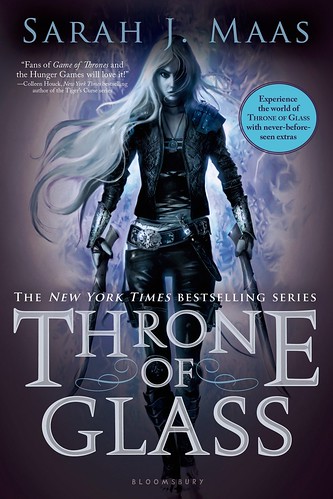
  The book's marketing and cover art present an interesting dichotomy. While the original cover accurately depicts the more romanticized aspects of the story, later editions feature sleeker, action-oriented designs that may attract a broader audience but also set up expectations the book doesn't fully meet. This disconnect between marketing and content speaks to a larger issue within the YA fantasy genre, where books are often packaged to appeal to both action-oriented and romance-focused readers, sometimes at the expense of narrative cohesion. 

  "Throne of Glass" seems to struggle with its identity, torn between being an action-packed fantasy and a romantic drama. This identity crisis results in a book that may disappoint readers expecting a hardcore assassin story while also potentially alienating those looking for a more traditional YA romance. The inclusion of elements like Celaena receiving a puppy mid-competition further blurs the line between the gritty world of assassins and a more lighthearted coming-of-age tale. 

 It's worth noting that many fans of the series argue that the second book, "Crown of Midnight," represents a significant improvement over its predecessor. However, for readers left unsatisfied by the first installment, the prospect of continuing the series may not be enticing enough to overcome their initial disappointment. 

 In conclusion, "Throne of Glass" is a novel with immense potential that ultimately falls short due to inconsistent characterization, an overemphasis on romance at the expense of other plot elements, and a lack of attention to world-building details. While it has found a dedicated fanbase and launched a successful series, it struggles to fully deliver on its promising premise. For readers considering diving into the world of "Throne of Glass," it's important to approach the book with measured expectations and an understanding that its strengths lie more in its entertainment value than in its depth or consistency as a fantasy narrative. Those looking for more cohesive and well-developed YA fantasy might be better served exploring other options in the genre. However, for readers who enjoy romantic elements mixed with their fantasy and are willing to overlook some inconsistencies, "Throne of Glass" may still offer an enjoyable reading experience. As with any book, individual tastes vary, and what doesn't work for some readers may resonate strongly with others. 

Friday, March 20, 2015

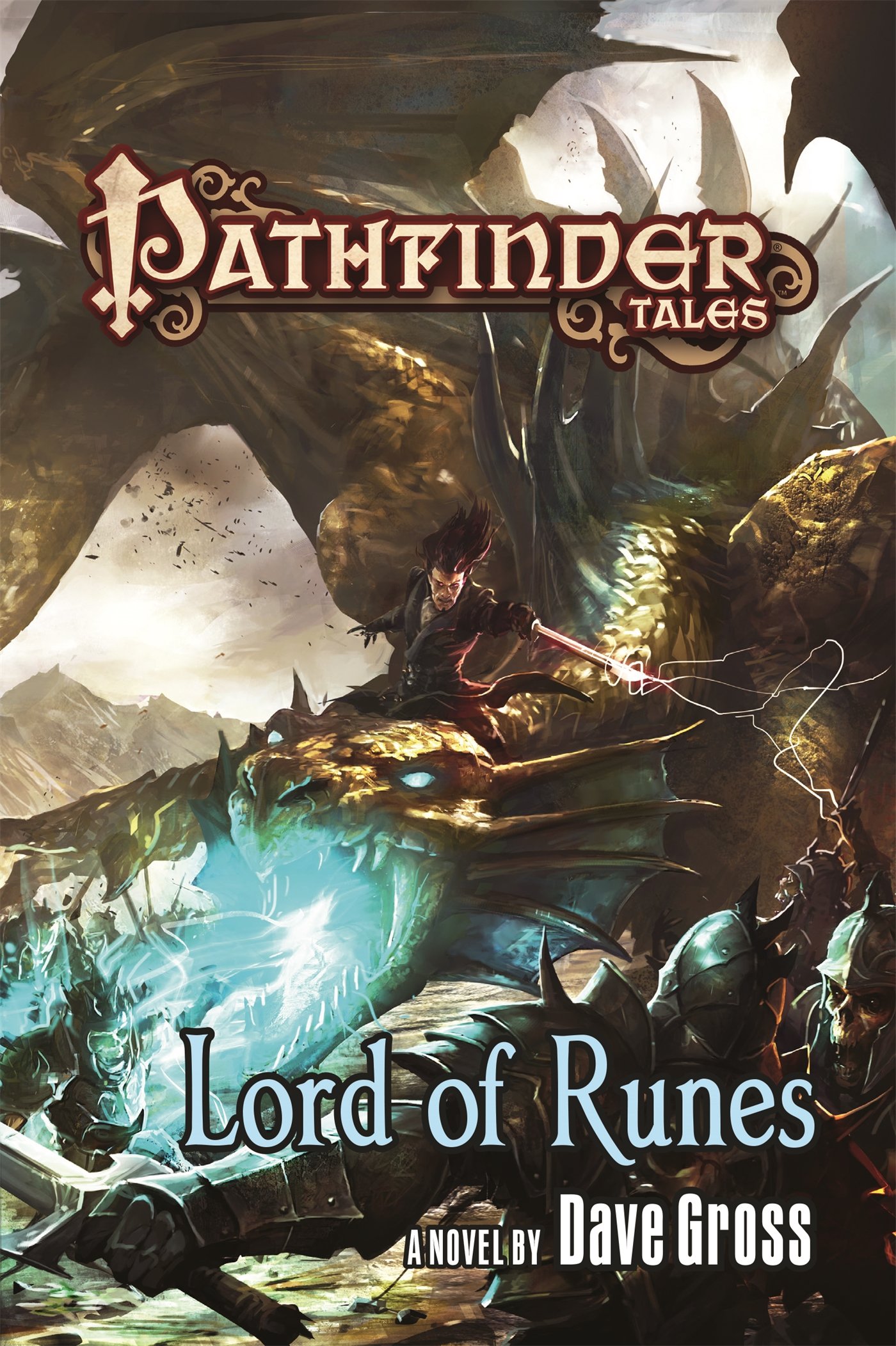
Pathfinder Tales: Lord of Runes

Pathfinder Tales: Lord of Runes

By Dave Gross

Macmillan-Tor/Forge
Tor Books
Pub Date   Jun 16 2015

3/5 Stars


         This is the first of the Pathfinder Tales books that I’ve been able to get my hands on.  The book starts rather slowly but as it moves forward it gets very interesting and considering there is a cliffhanger ending it only makes that ending even more maddening.  I’m not sure if this was the author’s intent; but it was certainly a little annoying.  The main characters are well written, but for the most part this book seems like a 1990s Dungeons and Dragons novel and not a particularly good one.  The best thing about series like Forgotten Realms or Dragonlance is that for the most part they can be appreciated without knowing a lot about what is going on in the book’s greater series.  In this case however, not so much.  I haven’t read any of the other Pathfinder books but I’m guessing they are similarly weaved together with demons and dragons.  They, I suppose are also tenuously tied together by what they call in the book; Pathfinder Chronicles. Which is interesting, but ultimately not enough to get me THAT interested in the book’s greater series.  However, I would like to know what happens…  Hopefully, these novels are not spaced very far apart.


Tuesday, February 10, 2015

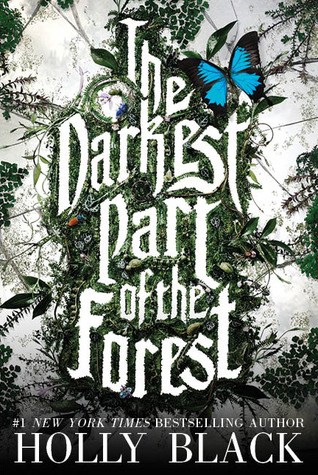
The Darkest Part of the Forest Book Review

The Darkest Part of the Forest

Holly Black

Little, Brown Books for Young Readers

January 13 2015

4/5 Stars


       While I usually really like Holly Black books in general.  I found this book to be a bit wanting in a few cases.  Firstly, the dissonance between the real world and the pseudo-real world she created is jarring in a number of places.  Such as, when she is talking about the Folk killing "Tourists," and that it was OK as long as they didn't mess with any of the townsfolk.  Really?  So some 16 year old girl is going to think it's alright for the Folk to murder people as long as it isn't anyone she knows?  Really?  I could have probably swallowed this from an adult's perspective but not a teenager.
     On this note as well, it was hard to judge what time frame this takes place in and therefore made it even more puzzling when it came to things like grammar or slang.  I guess it probably took place in the 90s but its still impossible for me to be sure.
     The other thing I didn't like was a long scene about three quarters of the way through the book  that is nothing less than a blatant;"parents just don't understand" scene.  Which considering these people have all been living in this magical town for years makes so little sense; I had a hard time getting through it.  That was one YA trope that we could have done without in this case.
     Everything with the Folk and the main characters was incredible.  I really loved the idea of Hazel and Ben being monster hunters.  This was the magical and cool part of the book that kept me reading.  All in one sitting, in fact.  So thank you Holly Black for that.

Thursday, December 4, 2014

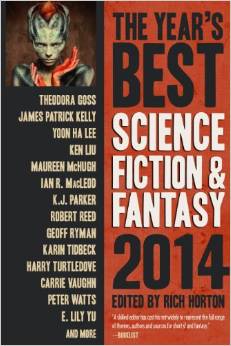
Year’s Best Science Fiction and Fantasy 2014 Review

Year’s Best Science Fiction and Fantasy 2014

Rich Horton

Diamond Book Distributors

Pub Date: Jun 10 2014

4/5 Stars


         So I always have some trouble with anthologies; I should probably be used to reviewing them by now.  But I haven’t gotten there quite yet.  But here we go…

          There are plenty of cool stories in this collection but here are my favorites, in no particular order:

                  A Stranger from a Foreign Ship, Tom Purdom

                  Effigy Nights, Yoon Ha Lee

                  Rosary and Goldenstar, Geoff Ryman

                  The Bee Her Heart, The Hive Her Belly. Benjanun Sriduangkaew

                  Dragonslayer of Merebarton, K.J.Parker

                  Loss, with Chalk Diagrams. E.Lily Yu

                  They Shall Salt the Earth with Seeds of Glass, Alaya Dawn Johnson

                  A Window or a Small Box, Jedediah Berry

                  Live Arcade, Erik Amundsen

                  Found, Alex Dally MacFarlane

                  A Brief History of the Trans-Pacific Tunnel, Ken Liu

                  It’s the End of the World as We Know It, and We Feel Fine, Harry Turtledove

                  The Dead Sea-Bottom Scrolls, Howard Waldrop

                  Out in the Dark, Linda Nagata

                  On the Origin of Song, Naim Kabir

                  Town’s End, Yukimi Ogawa

                  The Discovered Country, Ian R. MacLeod


               What I found so exciting and interesting about most of these stories is that they are so original, different from most of what is out there right now.  I also found the fact that the best stories are written by authors who have only written short stories or at least are only famous for writing short stories.  Some of the stories are seeming, at least to me, a tipping off point for any number of novels.  I’m kind of amazed that NONE of the authors that had my most favorite stories had never written in the longer form.  But perhaps that’s why these stories were so well crafted and interesting.  I would certainly recommend that anyone with a descent amount time, picks up these short story collection.


Sunday, November 9, 2014

A Darker Shade of Magic by Victoria Schwab(Preview)


A Darker Shade of Magic (Preview Excerpt)

V.E. Schwab

Macmillan-Tor/Forge

Pub Date: Feb 24 2015


     Kell is a traveler.  One of the last.  He is a magician who can move through parallel dimensions.  He is little more than an errand boy for the powers that be.  Whether it’s the Royalty of Red London, where there is magic to spare, the wastes of Grey London where magic is almost just a memory, or the war torn White London where magic is drained from people as if they were vampires because it is so precious.  But in these strange places there is something even worse coming.  Something to do with the Final London; Black London.  Where the magic ran so chaotic and rampant that it destroyed everything.  How is this all connected?  What does it have to with Kell?  And what part does the thief Lila have to play in all of this?  Well, I guess we will have to read the Darker Shade of Magic to find out.

     I read probably about one hundred pages of Darker Shade of Magic and I have to say that it one of the most engaging books I’ve read this year.  I found it very difficult to put down and I couldn’t help be completely lost in the worlds of the three Londons.  I love the mysteries that seem to lie just out of the reach of the reader.  The sheer talent that oozes from every page of this book, speaks to the master writer who created Vicious.  Given Victoria Schwab’s obvious talent; it isn’t hard to imagine that this book will be even more of an adventure than it has already hinted at.  I cannot wait until February to read to this book, which this preview read has made this book my #1 Must Read book of 2015!  It should be yours as well…

Tuesday, November 4, 2014

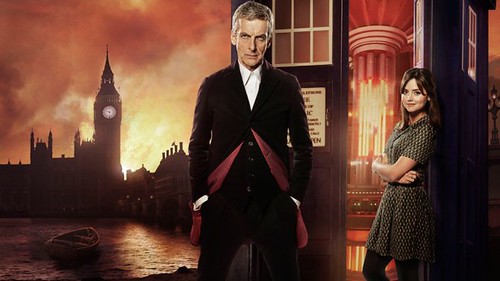
And Now for Something Completely Different(Doctor Who Season 8 and some History)(Spoilers for Season 8 AHEAD)


    When I was young, there was no internet, no cellphones, and very few TV channels.  I think back then we had around 100 channels on our cable when we had cable(it was rather expensive).  But back then we had Doctor Who.  Yes, it was on PBS and they were all reruns.  In fact, I don’t think I’d seen any Doctor but Tom Baker, until I was around 12 or so.  I watched it rather religiously, or at least as religiously as you could when it was on half of the year, every other Saturday night at Midnight.  Which is when I would use my VCR to tape them.  Anyway, back then the Doctor was incredibly niche and looking back on those shows now; they were horribly campy.  I probably would not be able to sit through an original Doctor Who episode all the way through, these days;except maybe Tom Baker(you’re awesome man).

    However, our little article here concerns Tom Baker and the history of Doctor Who coincidentally.  I recently watched the latest episode of the Doctor and it just broke me.  Not because it was so bad, but because it was SO GOOD and the rest of the entire season has been so horribly awful in comparison.  I don’t have BBCA or BBC, so I have to buy every episode or buy them all on BluRay(which is VERY EXPENSIVE).  So I buy them on a season pass from Amazon(about half the price of bluray).  So when I speak about the quality of a show, please ladies and gentlemen who don’t pay for each episode(LUXURY), don’t give me platitudes about how hard I am on this show or other…

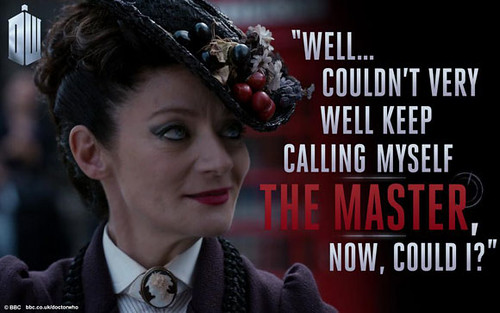
     The season finale part 1, was one of the best episodes of Doctor Who I’ve seen this year and for that matter the one thing it did that made me most excited was that it reintroduced the Master.  But perhaps, the showrunners don’t understand what they have done here.  The Master did appear in a couple of strange appearances in first couple of seasons of the new Doctors.  I mention this because the New Doctors have DEFINTIELY taken some liberties with the core story.  But hey, they are the ones who now say what’s canon; so far be it from me to complain(except I usually do).

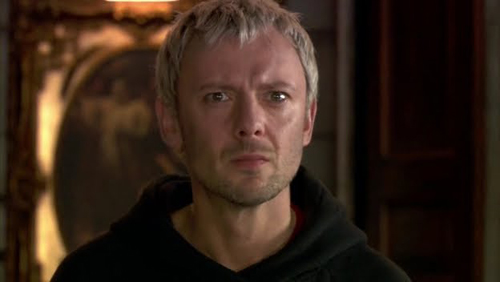
     That Master, lasted I believe two or three episodes and he killed himself.  That gentleman is pictured below…

      He wasn’t much of a villain, mostly because he was insane.  Which was a trait from the original Master.  Except that the original Master wanted to destroy all the Time Lords and become the ruler of the entirety of Space and Time.  Which I believe he thought was possible somehow.  The new Doctor’s version, I believe wanted to rule the earth and then decided maybe he would rather destroy all of space and time.  Not as interesting…

     The original Master was incredibly intelligent and had his own crazy cool Tardis.  It could camouflage itself into the environment and back then there was also mention that he could control how and when he regenerated.  He was usually trying to either kill the Doctor or get him to join his cause.  Which he felt made sense, as the Doctor stole his Tardis and became a rogue to the Time Lords.  He certainly wouldn’t have given a rat’s tail about earth(all his stories were set on earth, which is the new Doctor’s envogue place to be).There was also some mention of the Master and the Doctor knowing each other back at the Academy on Gallifrey.  The Doctor explained that the chameleon circuit in his own Tardis was busted and that he liked the Police Box anyway.  He never mentioned the regenerating but this too appears in a New Doctor episode with Matt Smith and River Song.

    What wonderful lore, right?  Well the man pictured above had none of these traits.  He was just crazy and had some inexplicable powers and even though with the second appearance they tried to back pedal with this a little the damage was already done and the Master was just a minor bump in the road for the new Doctor.

     So that brings us to the season 8’s Season Finale Part 1.  We find out at the end that…


      It is spectacular and cool.  But yes, folks we are still on Earth and like I said, what does the Master care about earth?  No idea…  Anyway, the episode wasn’t most well done Doctor Who ever(I miss Matt Smith).  And their first interaction is a little strange and disjointed which I guess points back to his insanity.  But it is the first sign of life in this meandering train wreck that has been more about Clara’s love life than about “Righting the Wrongs of the Past!”  Which was what it was supposed to be about.  I frankly love Jenna Coleman, I think Clara is an awesome character.  But I think Danny Pink is boring and unnecessary in a season which had no real high points except in a couple of philosophical question shows that felt absolutely so contrived that you could read,”We have a moral for the story.”  In the end credits!  That’s not Doctor Who people, I’ve been watching Doctor Who for around 20 years now and I can tell you that Doctor Who is primarily:

     Other worlds

     Non-violent solutions to problems

     Cool and sometimes cheesy monsters

       (And recently)

     Awesome Companions that are more interesting than the Doctor himself sometimes


     Peter Capaldi seems to be a master of holding back.  He is such a good actor and he is being used so poorly here.  He and Jenna have virtually no chemistry and you can see it from the very first episode.  Although that episode was definitely in the top 3 episodes of the season.  What were my favorites in this bad season?

      Deep Breath(episode 1)

      Deep Water(episode 11)

      Mummy on the Orient Express(episode 8)

    Exactly in the order!  Mummy would have been a bad episode in a regular season but at least it wasn’t some world ending catastrophe that had a very lame and blunted conclusion(just because).

     So what am I saying with this?  I cannot believe we just had a 11 episode season of Doctor Who with 2 good episodes and on that was just OK.  And another 8 episodes that were just crap!  What is going on with this show?  I thought things were going to get better but they just stayed the same.  There are critics that want the show to move away from it’s roots.  But if they move ANY MORE AWAY from their roots the show won’t be Doctor Who.  It will be “Some Alien guy and some human fly around time and space and do stupid stuff.”  Because frankly people, that is what it is starting to become now.  Doctor Who needs to embrace it’s roots and get back to themes that Matt Smith and David Tennant had in their stays as the Doctor.  Because those were epic shows, that here and there had a misstep.  Not all missteps with shots of brilliance occasionally sneaking in.  I have loved the show overall, and everyone has a bad season.  But I just don’t understand the direction that this season was heading in; what was the purpose?  For me to care about Danny Pink or for me to care about his relationship with Clara?  Or for me to care about her feelings for him?  Sorry didn’t work…

    Well, I guess there is always the Christmas episode, right????

Monday, October 20, 2014

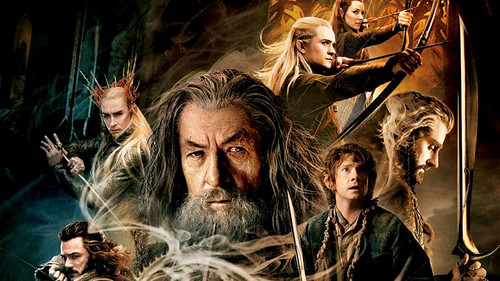
The Hobbit: What Peter Jackson did right and what Tolkien couldn’t have understood…

            When I was twelve, I read the Lord of the Rings.  It was one of the best books I’d ever read.  This book was probably what put me on the road to loving fantasy fiction.  I had also read the Hobbit way back then as well.  But I have to admit my memory of it was lacking when I saw the first of the Peter Jackson movies.  I also remember the animated film of it quite a bit better than any of the written material.  However, recently due to beginning to play Middle Earth: Shadow of Mordor.  I decided to reread all of the books, just to have a better idea of the more detailed world.  Also, I felt like Alexa Ray Corriea probably knows more about the works or J.R.R.Tolkien than I do and I I can’t have that(just kidding Alexa).  But enough backstory.  Suffice it to say that I recently finished the Hobbit and I’ve seen both of the released Peter Jackson Hobbit movies.  I also, just started the Lord of the Rings, which seems just as good as I remembered.  But the Hobbit was a completely different story.

            The Hobbit is not a very long book; around 300 pages or so depending on your edition.  Too long for a single movie, which is probably why Peter Jackson broke it into three.  However, the movies and the book hardly bare much of a resemblance to each except in extremely broad strokes.  I won’t go blow by blow here.  Rather I will make some assertions to reveal some of the more obvious problems correlating the two works.

            Many people feel that the Peter Jackson movie is a bad imitation of the book.  Many people feel that Peter Jackson, has changed the plot and themes of the Hobbit to more easily run into the Lord of the Rings; rather than just the prologue that it was never meant to be until the Lord of the Rings was done to begin with.  Peter Jackson has already explained that the movies are a combination of the original story along with some things from the annotations, appendices, and so on.  The first and second movies were great in the sense that they do work well in the themes and tone of the Lord of the Rings movies.  The actual action of the plot was also wonderful.  Not in correlation with the novel, but on it’s own.  Which is a very good thing, because a faithful retelling of the Hobbit in the 21st Century would certainly flop.

            The Hobbit, the novel; is not a well written or plottedl.  The book is not interesting to the modern reader at all.  Less happens than in a similar book of that length.  Also, very few of the characters, even the heroes are interesting or very heroic.  The main characters of the Hobbit are Bilbo Baggins and Gandalf.  The dwarves are not in anyway heroic or very interesting.  Other than Thorin and Balin, they are little more than a list of names that Tolkien continuously goes over.  Tolkien takes any chance to go over the names.  I don’t know why, but he does this at least two dozen times in the book.  I don’t know what he found so fascinating about creating situations where he could do this.  But every single time, it takes the reader out of the story completely.  The Elves are proud and a bit apathetic.  They are little more than wraiths and even when things go well toward the end; there was little to discover about the Elvish race in the Hobbit.  All you know about dwarves by the end is that they are a bit dishonest, very cowardly, and very greedy.  Men fair little better.  The Bard is the only man who really fairs well in the Hobbit.  Bilbo and Gandalf are really the only characters who come off as heroic.  Gandalf less than Bilbo.  I’m not sure why Tolkien had this animosity toward people in general, whether a made up race or his own.  But it seemed like he was quick to point out people’s flaws and slow to show their strengths.  Even the hobbits, who he seemed to love above all others, were shown in less than a flattering light most of the time.

             Now, the Peter Jackson movies are a completely different story.  From the tidbits and pieces that they must have gleaned from the appendices and such.  They created not only one plot but three.  Probably because they were making three movies.  But creating these plots and characters make the movies much more interesting and far more modern than the book.  The book on the whole is rather boring and the fact that majority of the book takes place over months rather than the way the movies run over probably a few days.  The pacing of the two is what I’m considering here.  While the movies may be argued to move too quickly; it is hard to argue that the book does not move far too slowly.  The slow movement gives the narrator lots of time to make the characters complain about their lot.  Which I found rather funny considering they aren’t saving the world.  They are going after a dragon’s gold.  So why complain?  If you don’t want to do it anymore, don’t.  This was also quite prevalent in the book, that one could simply give up and go back home.  Yes they hundreds of miles from home, but I guess they just jump on the Middle Earth Mass Transit and go home.  If you are in the middle of no where hundreds of miles from home; you really don’t have the option to just give up.  But it certainly seemed a constant theme.

           I found myself being less and less sympathetic toward Biblo, the more he complained.  I also felt the dwarves, especially some that were little more than names, were even less sympathetic considering it was kind of a,”fair weather friend,” situation.  Where in, they were more than up for anything as long as it was easy and didn’t involve any danger.  These maybe relatively realistic responses from the average person, but not something I want in my fantasy fiction protagonists.  Also, I would say that in retrospect; not seeing EVERY SINGLE travel sequence played out in the movies is wonderful.  Because there is practically no benefit in them; in the book they just add to the word count.

            One of the other things that sticks out toward the end of the book; are some of the insinuations about the “dragon’s hoard effect” or “dragon’s gold fever.”  Both of these referring to people who get a bunch of gold and then worry that people are going to try and steal it from them.  So they go off and start killing people or making life miserable for their fellow man in the pursuit of keeping all the gold for themselves.  Which is mentioned but never explained in the story. In the Peter Jackson film there is definitely this effect on the Arkenstone.  So much so, that it almost mirrors the effect of the One Ring. But much like many other things in the book, people seem to be the only ones susceptible to this.  Being that dwarves seem to act this way anyway, dragon’s gold or no dragon’s gold.   The Arkenstone is rather a small thing in the book, a kind of postscript, or icing on the cake of betrayal and greed that the final few chapters show.  But in the movies it is much more prominent and rather than creating non-heroes which was what the book seemed to be trying to do.  The movie tries to make corrupted heroes.  Which, personally, I prefer.  I would rather a heroic person become corrupted than make a relatively relatable character greedy and cowardly for the sake of the story.

            I think many people remember the Hobbit by J.R.R Tolkien from their childhood and probably remember it a certain way.  Which I can certainly agree with and relate to.  I wish I hadn’t read the book as an adult.  Because in there I didn’t find a wonderful children’s book that filled my mind with wonder.  Rather a poorly written book about people who just wanted gold and didn’t care what they did to get that gold or who was hurt in the process.  There is a lot more that I could say about the novel version of the Hobbit but suffice it to say none of it would be good.  I think J.R.R Tolkien did an excellent job with his first book and certainly the first REAL example of Epic Fantasy.  But by modern standards the Lord of the Rings is far more like what we expect from Fantasy Fiction today.  Perhaps, back in the 60s people just took books at surface value, especially those aimed at children and didn’t discuss them properly.  Also, I feel this may have been one of those instances of adults getting one message from the book and children getting another.  Much like Chronicles of Narnia.  It also could be just another example of some things not holding up with age.  I don’t believe I read about a single female character in the entirety of the book for instance.  But again, I could speak at length about what Tolkien did right and wrong.  Suffice it to say; I applaud the creativity and earnestness of Peter Jackson; because if in twenty years everyone remembers the Hobbit the way he portrayed it and not the way Tolkien did, we will all be better off.

Monday, October 6, 2014

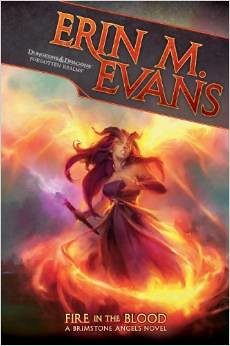
Fire in the Blood Book Review

Fire in the Blood

Erin M. Evans

Wizards of the Coast

Pub Date: Oct 14 2014

4/5 Stars


          When I heard that Erin Evans was doing a sequel to Adversary I was pretty surprised.  Not because Wizards of the Coast is unknown to do sequels even sequels within a series as Adversary was in the Sundering Series.  But more because, the book was so middling.  It seemed like the author created it for something else and then transplanted it into the Forgotten Realms rather than making completely from the ground up for the world.  When I read the book, I kind of imagined that the author owed Wizards a book and this was her way of fulfilling your obligation.   I guess I was wrong and I must to some degree apologize to Erin Evans for this supposition; because Fire in the Blood is an excellent book and while it took me almost a month to read it.  When I reached the end I could hardly believe that I didn’t want it to end.

        Everyone from the first book is back and while I was very critical of the characters the first time around.  I have to admit they grew on me.  I was less excited about the setting as the whole Netherese War is REALLY wearing out it’s welcome.  But the actual plot and the characters who participate in it are interesting and I was surely hooked all the way to the end.  Also, as this appears to be the first in a series of it’s own.  I was pretty happy that the author executed on it so well.  All of the things I disliked about the first book seemed better explained and the quality of the writing itself was better.  The end was especially well done.  While I was a little put off by the fact that one of the major plot lines that at least is represented to the reader as a major plotline, is not dealt with in the end.  I can certainly understand that the author is using this to get people to read the next book in the series.  Which is good, often Wizards books have no through line plot which makes each one almost too self contained. 

      While this series is definitely not my first choice in the worlds of Wizards of the Coast; I have to say that from my perspective it gets the award for VERY MUCH IMPROVED.  If you even liked the characters from the Adversary you owe it yourself to read this book.  But if you haven’t read the Adversary you need to, I’ve seen a lot of people complain about not being able to follow this book coming to it cold.  Which is understandable, and while I didn’t love the first book; I did give it three stars.  So it isn’t bad, it just wasn’t great. 

Monday, September 8, 2014

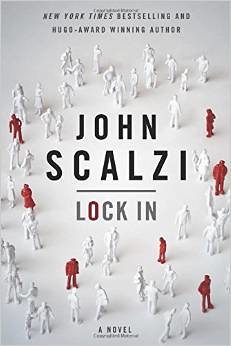
Lock In Book Review

Lock In

John Scalzi

Tor Books

August 26, 2014

4/5 Stars


       When I first heard about Lock In; I was a bit skeptical of the premise.  All of these people contract this flu that has three stages and in the third stage they suffer from lock in.  Which is essentially being a prisoner in your own body.  This would normally, be the entire of plot the book.  How does the disease progress?  How do we stop it?  Our intrepid young hero(scientist usually) tries to discover the answer to all of these questions and the mysterious origins of the disease.  Yes, well, John Scalzi decided not to do that, thank god.  He wrote a book that was a post-outbreak world.  Which is even more interesting.  How does the world cope with the victims of the disease?  What are the political ramifications of all this? How does it effect economies all over the world?  These are some interesting questions that are more or less in the backdrop of Lock in.  Instead the story mostly focuses on a series of strange murders being investigated by a new FBI agent Chris Shane and his partner Vann.  Chris is a victim of the lock in, in fact, he is one of the most famous people who has.  So we see the world from his perspective.  While Chris is a pretty good main character there are plenty of things about the book that, from time to time.  Made me cringe a little.

      John Scalzi is famous or infamous however you want to look at it for his dialogue and lack of description.  He rarely describes things, people, or places.  He just doesn’t, can tell you why but he doesn’t.  Anyway, some of his dialogue hand offs in the final third of the book are just bad.  I mean awkward in a way that makes the reader cringe and then try to reread it, thinking they made a mistake.  Unfortunately it was John Scalzi who made these mistakes.  If your writing style is so committed to dialogue that you make it your central feature.  That’s great, you just better do it right, all of the time.  Overall, the author does a masterful job with the dialogue and the plot progression.  The mystery is a descent one, although it’s not one that you’re probably going to be able to figure out on your own.  I’d imagine if I’d read the book in a shorter period of time I probably would have been able to see the end coming more easily.

      While Chris and Vann have a nice, but short buddy cop relationship.  I often found myself thinking, that it was a little bit too brief.  We don’t really care about Vann; mostly because almost until the end we know virtually nothing about her.  While Chris seems like a nice enough guy;  it’s kind of like caring about a celebrity that decides he wants to start playing baseball or something.  It’s interesting but you rarely care if he fails or succeeds.  Many of the more supporting characters like Tony for instance, seem a lot more interesting and while they aren’t quite as fleshed out as Chris(we are reading from his POV).  I felt like Tony was a lot more relatable guy to most readers.  I don’t know why the author decided that the main character should be rich, famous, and an FBI agent.  But there was only so far things began to stretch before the reader just had to forget about the whole thing and except it on suspension of disbelief terms if nothing else.  I think for a book with so many supporting characters, I would have liked more information about the more central characters rather than more dialogue that was essentially meaningless in the end.

       All told, I was happy with Lock In and I would definitely recommend the incredible audio version narrated by Wil Wheaton or Amber Benson depending on which you choose.  I found listening to the book even more engaging than reading it.  So keep that in mind.